
WE SUPPORT THE PEOPLE’S PARK

testimonials & thoughts from workers


“I want everyone to consider what it might feel like to ask your university to acknowledge that genocide is happening and to stop supporting it for 7 months only to be characterized as a threat to your peers, professors, and the community writ large. Time and time again, our students haven’t been engaged in good faith by the president or upper admin. In fact, they’ve been openly treated like enemies in campus messaging and the press. More, they’ve experienced direct harm by people the university could have easily kept away from them (and who security observed causing violence on more than one occasion). They are holding their ground under threats to their personal wellbeing because they have the kind of conviction we could only dream our students might someday show for the rights of everyone to not just life, but a future. On a campus whose messaging is so firmly rooted in repair and reconciliation, the open refusal to treat the Indigenous people of Palestine as even worth consideration is a loud choice. Our students are impressive, clear in their demands, and are willing to give up a lot to intervene even a little in a live-streamed genocide. I want them to get what they are fighting for. This requires being very strategic, but I am deeply uncomfortable with imposing the politics of respectability on their efforts to intervene in the targeted decimation of lands and loved ones some of them call kin. I think our role is to help them do this work well and in ways that are going to make the most of their efforts. I trust them to make good things out of a myriad of awful experiences and in the face of unconscionable levels of violence.“
**
“Suspicion is an affect that, like gossip, can be used to either mobilize or subvert structural power. When people in positions of power wield suspicion, they endanger those they suspect. They have access to tools of state violence with which to do so, like cops & private security. When people without structural power (or with far less power) voice suspicion, it can be one of the only means of subverting or resisting some of that powerlessness, and of offsetting some of the suspicion that is always put on us from those “higher” up.”
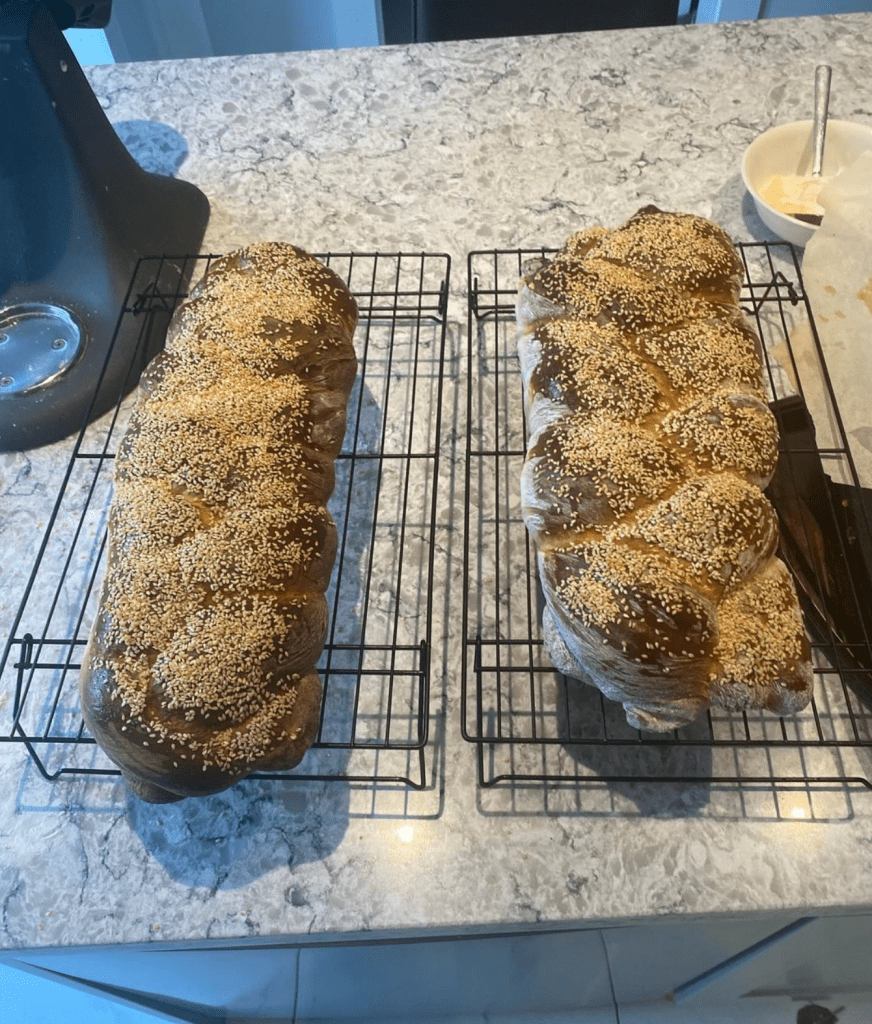
Shabbes in the Camp:
“After five weeks of being one of the faculty members who has been supporting the camp, I finally was able to be there on a Friday when they had shabbes dinner.
Even before this I had experienced the camp as a space where Jewish students and faculty can feel comfortable and safe- and yes this is a central principle of the camp- that fighting for the rights and very lives of Palestinians does not mean being antisemitic.
Friday night shabbes dinners have become a central ritual of the camp- not just for its Jewish students but for all who are there. It’s a chance to acknowledge that they have been doing this fight for justice for another week, ground themselves in remembering why they are there- for Gaza- acknowledge those in Gaza who have not been able to make it through the week. But it is also a time for Jewish ritual, where lighting the candles, saying the blessings on challa and BDS grape juice allow the Jewish students (and their friends) to connect to their traditions.
Jewish songs are taught- and by week five- the camp has some favorites. This Friday night someone also taught a song in Yiddish, and the camp practiced mixing the song with some of their chanting for Palestine. This inspired one of the Palestinian students to plan on recording them singing this song in Yiddish, combined with chanting in Arabic to create a powerful melding of the camp culture.
Several people there commented that their first experience of Shabbes dinners is from these ones at the camp- this is precious.
Some might dismiss this Jewish presence as coming from a space of ignorance, or tokenism (“see we don’t hate Jews”)- but anyone who truly interacts with the Jewish students there- and with their friends Paletsinians and others- at camp knows that they are coming here from a place of Jewishness and that it is a deep part of the camp’s culture.”
ENCAMPMENT TESTIMONIALS

“Tansi, I wish I could introduce myself, tell you my parents’ names, and grandparents’. Let’s save that for a later date when it’s safe to do so.“
**
“I am a student at UVic. As an Indigenous studies major we are taught to recognize colonialism in all its forms. Violent land dispossession from Turtle Island to Palestine is a crime. “
**
“Dear University and professors. You taught us about how the world once normalized the genocide of Indigenous peoples as they tried to assimilate us, exterminate us, and steal the land in so called Canada. “
**
“Dear UVic, we are peaceful protestors—your students and community. The young voices you taught to be the future that humanity deserves. I may be young, but I know that what is happening to Palestinians is criminal—it goes against humanity. As students we have obligations to protect life and the environment. As students on Indigenous lands we must decry violent occupation and colonialism from Turtle Island to Palestine and beyond!“
**
Ya’uc‘
I echo my cousin when I say that I wish I could introduce myself properly. I wish I could share my feast name and my English name, introduce my home and my family so that we might get to know one another better or learn that we are already connected through our relations. I hope that one day we can meet this way. I hope when that day comes you will introduce yourself in kind.
These introductions may seem strange to you. It may seem redundant or silly to share who our parents and grandparents are through the lens of capitalism and patriarchy. But through an Indigenous lens it nurtures the foundation of our society: relationships. Our introductions acknowledge that we are all interconnected. They ground us in our responsibilities and seek to find where our lives intersect so that we may begin building a relationship.
Colonization severely damaged our ways of life across Turtle Island. Ancestors and relatives were disposessed of their land with violence, under duress, or conned away with contracts not recognized by our laws. They were displaced time and time again as the land they occupied was coveted by colonizers for resources or space. Time and time again they were moved to less bountiful land. To less land. Some were forced to make difficult decisions in purchasing allotments, which allowed us to be further displaced and divided, and destroyed our ability to prepare for the next seven generations to come. When that didn’t break us, colonizers took what we hold most precious – our children – and tried to rip away their culture and language, more often than not brutally, in residential schools. Even to this day treaties are encroached upon, traditional territories developed without consent, and unceded land is occupied. If you do not know of what I write, it is because the history is not taught but glazed over and shoved under the rug. Please go out and learn it, for when we do not learn from and remember history, it repeats itself. And that is what’s happening right now.
Palestine has been segmented. Palestinians have been displaced, time and time again. Safe zones turned evacuation zones as colonizers with power change their mind on which land they can occupy. Refugee camps bombed. Schools. Hospitals. Children, and adults, traumatized. Land stolen. This is a repeat of the colonization of Turtle Island, but with modern weapons and politics. Yet, entities who tout decolonial values are standing by, doing nothing to ‘remain neutral’. No action is an action. No decision is a decision. Silence speaks volumes.
I am sickened by my University’s lack of action. Even more so knowing where millions of their investments lie. Knowing that there are no universities left in Gaza. Seeing people go about their day like nothing is happening makes me feel scared and alone. Powerless.
The encampment is using collective voices, community, and relationships to pressure UVic to take action against the colonial violence and genocide that is actively happening in Palestine. UVic says it values decolonization. Those words are hollow if they are only applicable when easy or convenient. Those words are hollow as UVic stands by because of policy. Indigenous solidarity with the UVic encampment, and others, is so important because it is in line with our teachings of working together and building relationships. Supporting the encampment is believing in real change and using our individual contributions to bring it about within our own spheres of influence. We need to speak out against history repeating itself and be good ancestors that speak out and stand up for what is right.
I need you, dear reader, to know that whoever you are you can help, too. Everybody brings unique perspectives, skills, resources, teachings, and more to movements like this. Everyone can play a part.
Our ancestors are watching.
 UVic Workers for Palestine